
Three choices you make before anybody inspects anything
The agent, the seller and the item. All three are settled before a single photograph is taken, and all three constrain what the rest of the process can do for you. This page is about making them on purpose.
Category decides more than brand does, as the rest of this page argues.
What every agent does
Start with what all of them do identically
Comparison pages usually skip this part, and skipping it is why so many of them read as advertising. Every shopping agent in this market does the same five things: takes a link, buys on your behalf, receives the goods into a warehouse, photographs them, and consolidates and forwards them abroad.
None of that is a differentiator. It is the job description. An agent that did any of it noticeably differently would not be a shopping agent, and any page telling you that a particular operator uniquely buys items on your behalf is telling you nothing at all.
So the useful question is not what an agent does. It is what an agent has written down about the parts where things go wrong, because that is the only part where they actually differ.

Six published things worth comparing when choosing an agent
Six questions with checkable answers. The right column records what OrientDig publishes, not what it delivers, and the difference between those two matters.
| Question to ask | Why this one separates them | What OrientDig publishes |
|---|---|---|
| How many inspection photographs are free? | It decides how much you can see before committing to the expensive leg. | Three to seven high-definition photographs, stated on the product page. |
| Is the inspection scope written down? | A scope you can read is a scope somebody can be held to. A vague promise of quality control cannot be. | Published per item type, on a page of its own, including what is excluded. |
| Is the return route written down, with its fee? | Return policy is where costs hide, and where the difference between operators is largest. | Published, with a 0.75 USD service fee named and the freight rules set out per reason. |
| Are the post-delivery time limits published? | An unpublished limit is a limit you discover by missing it. | Published, though across two pages carrying different numbers, which is itself worth knowing. |
| Does the agent claim to authenticate goods? | An operator claiming this is claiming something a few seconds of looking cannot deliver. | It states plainly that it cannot determine whether goods are genuine or counterfeit. |
| Can you read the help centre before signing up? | An operator that hides its rules behind a login is choosing not to be compared. | A help centre with ten sections, readable without an account. |
What this table deliberately does not do is rank anybody. Publishing a rule is a low bar that a surprising number of operators fail to clear, and clearing it is not the same as a promise about how the rule gets applied on a Tuesday when a seller is being difficult.
It is also silent on price, on shipping lines, on packing options and on how fast anybody replies, all of which are real and none of which this site measures. If one of those is your deciding factor, compare on it somewhere else and treat this page as covering a different question.
The question it cannot answer at all is when you should use someone else, so this paragraph will. If your item sits in one of the excluded categories and you want a route back, if you need an item switched on and tested before it ships, or if you are buying something fragile enough that the compensation exclusions frighten you, another operator may fit better. Knowing that before you pay is worth more than any comparison table.
Some items are a poor choice before anyone has looked at them

Deciding what to buy is usually framed as a question about taste and price. Two of the three figures on this strip say it is also a question about logistics.
The tag on the right is a mail restriction class. Goods are sorted into classes, and some classes do not fly. Anything with a battery, anything pressurised, anything liquid and anything with a powder in it lives close to that boundary, and discovering which side it is on after the item is in a warehouse in another country is an expensive way to find out.
The weight is the second one. International freight is priced by weight and by volume, so a heavy or a bulky item can cost more to move than it cost to buy. That is not a reason to avoid such items. It is a reason to look up the shipping before you order rather than after, using the operator own estimation tool.
Reading the listing
Choosing a seller, and judging the site that surfaced them
Both of these are done from the same screen, in the same thirty seconds, and most people do neither.
| What to look at | What it actually tells you |
|---|---|
| Repeat buyers | The strongest single seller signal on a marketplace listing. People who bought twice were not disappointed the first time. |
| Recent dispatch promise | A line such as ships within 48 hours describes the seller as they are operating now, which a lifetime sales total does not. |
| The returns badge | A domestic no-reason return promise is a real commitment, but it is made to a domestic buyer. Your route and your window are different. |
| Whether the listing states measurements | A seller who publishes the actual measurements of the piece is a seller you can hold to them. Size deviation is outside the inspection scope, so this is the only place it gets addressed. |
| Whether the Spreadsheet card matches the listing | Cards drift. If the picture on the card is not the product on the listing, the card is stale, and a site full of stale cards is telling you how much attention it pays. |
| Whether the Spreadsheet site explains anything | A wall of pictures is a catalogue. What makes a useful Spreadsheet site is the part that tells you something you could not have guessed from the picture. |
The last two rows are about the site rather than the seller, and they belong here because they are read in the same glance. A category page that has not been touched in a year will happily send you to a listing that no longer exists, and you will not find out until an agent tells you the seller has nothing to sell. Those two rows are a fair test to point back at us, which is why what a Spreadsheet owes the person browsing it is written down rather than assumed.
Two things to settle before you commit to any of it
Both are about the gap between deciding and knowing, which is where this kind of shopping differs from every other kind.
- Budget
The bill you cannot see yet
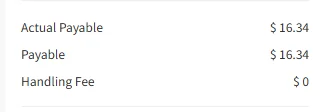
The international freight is quoted after your goods are sitting in a warehouse, which is the point of lowest leverage in the whole process. Work out roughly what it will be before you order, not after.
Comparing agents on this is legitimate and this site does not do it: run the same hypothetical parcel through each operator estimation tool yourself.
- Attention
The decision you will be asked to make
Between the two payments you get one chance to look at what you bought, in the form of a handful of photographs on a row you have to go and find.
Pick an agent whose photographs you can actually read, and pick a week to order in when you will be around to read them. Both of those matter more than most of the things comparison pages measure.
Questions people ask before committing
Is OrientDig the best agent?
This site is not in a position to say so and would not be believable if it did. What it can say is that the things listed in the table above are published, in writing, on pages anybody can read before signing up. That is a genuine and unusual quality, and it is a different claim from being the best.
When should I use a different agent?
When your item is in a category the return standards exclude and you want a route back. When you need somebody who will power on an electronic item, because no appearance check will. And when the thing you care about most is a service this site does not cover, such as a particular shipping line or a particular packing option, in which case compare on that and ignore everything here.
How do I judge a Spreadsheet site?
By whether its links still work, whether its categories are honest about what is in them, and whether it tells you anything you could not have guessed. A site that is only a wall of pictures is a catalogue; what makes a useful Spreadsheet site is the part that explains what you are looking at.
The seller has thousands of sales. Is that enough?
It is one signal out of several, and the weakest of them on its own. Repeat-purchase counts, recent dispatch promises and the return badge together say more than a lifetime sales figure, because they describe the seller as they are now rather than as they once were.